Two bathrooms the same size, in the same neighborhood, finished to a similar standard, can be separated by a factor of three. It is rarely the tile.
The question that sets the budget is simple: does anything that drains have to move? Everything else is a smaller decision than people expect, and this one is bigger.
What you can change while the drains stay put
A surprising amount. If the toilet flange, the shower or tub drain, and the sink drain all stay where they are, you can change essentially every surface in the room and never open the floor.
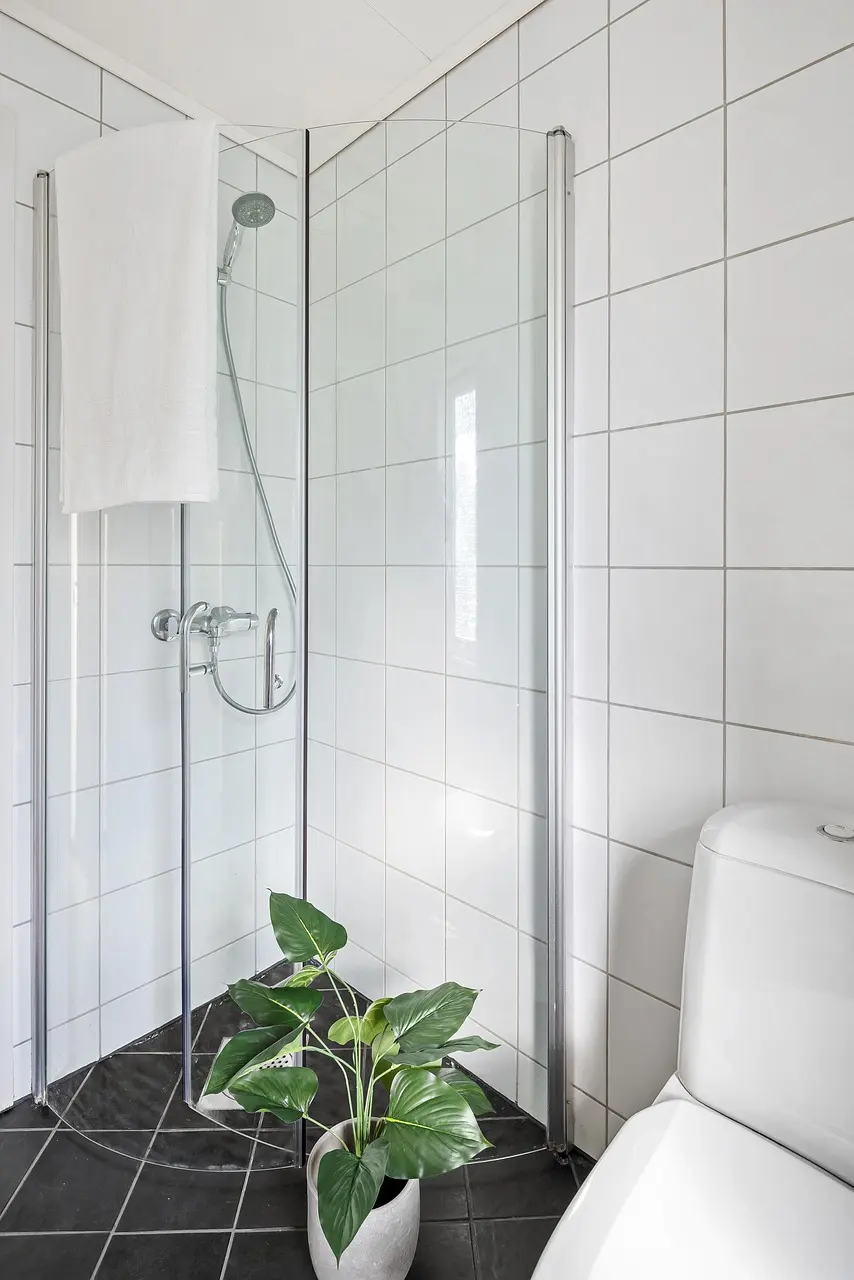
New floor tile. New wall tile in the shower. A new vanity in the same footprint, with a new top, new sink, and new faucet. New toilet. New mirror, lighting, exhaust fan, and hardware. Paint. A frameless glass enclosure in place of a shower curtain or an old framed door.
That is a room that looks completely new and, from a plumbing perspective, has barely been touched. Supply lines are flexible and easy to adjust behind a wall; drains are the part set in the structure.
This is also the version where the timeline stays reasonable — often a couple of weeks rather than a couple of months — and where you are far less likely to meet a surprise.
What tips it into a full remodel
Moving the toilet. Moving the vanity to a different wall, or going from a single to a double sink where the second drain does not exist yet. Removing a wall. And the big one:
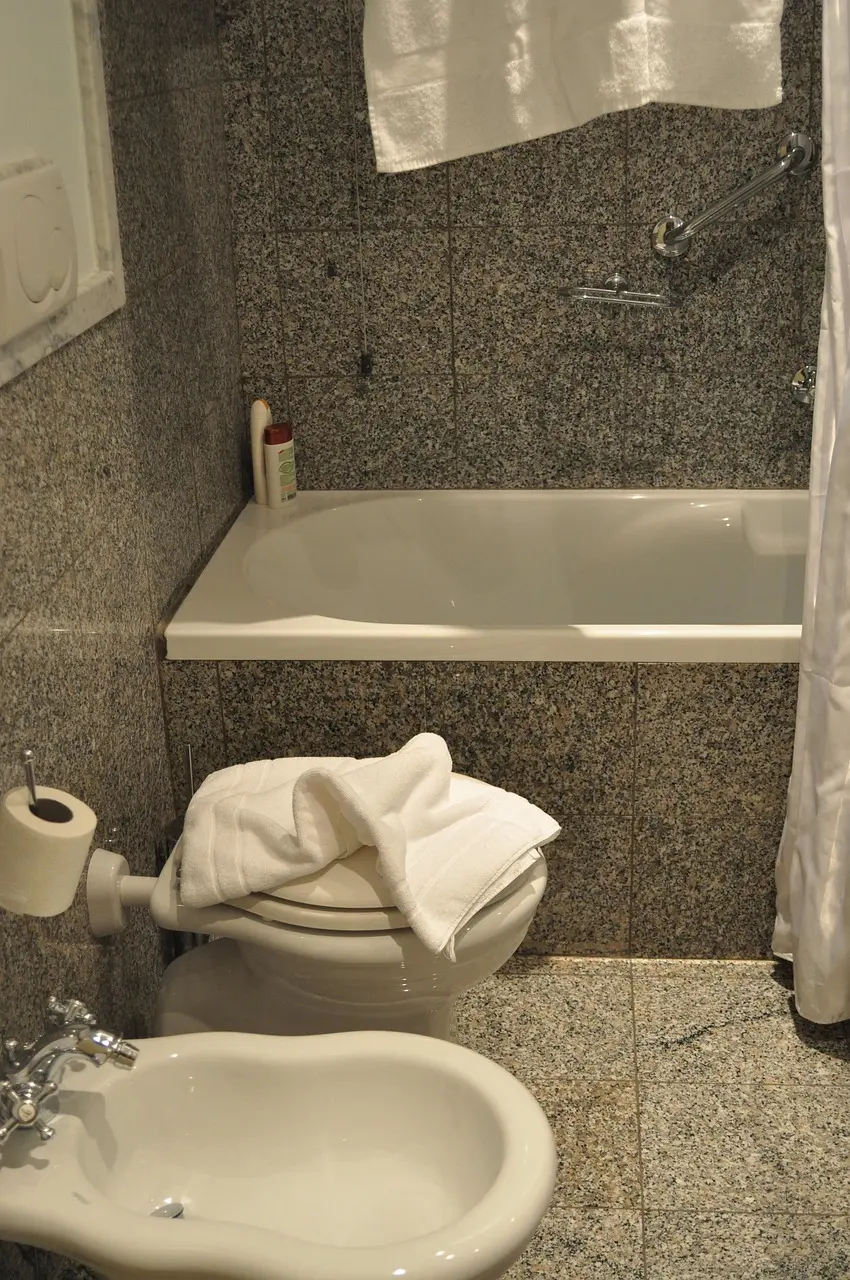
Converting a tub into a walk-in shower. This is the most-requested change we hear and it is not a surface job, because a tub drain sits at one end of the tub and a shower drain generally sits in the middle of the shower floor. The drain moves. That means opening the floor.
It is completely doable and it is often the right call, particularly for people planning to stay in the house as they get older. It just belongs in the remodel budget, not the refresh budget, and knowing that at the start is much better than discovering it in week two.
Why a slab foundation changes the math
Most of Orange County is built slab-on-grade — the mid-century tracts through Lakewood, Rossmoor, Cypress and Los Alamitos especially. There is no crawl space under the bathroom. The drain lines are cast into concrete.
Moving a drain in a slab house means saw-cutting the concrete floor, trenching, re-routing the line, inspection, and pouring back. It is noisy, it is dusty, it takes days, and it needs to be done properly because it is going to be buried again for another fifty years.
In a two-story house, a second-floor bathroom sits over a joist bay instead, and relocating a drain there is meaningfully less involved — though it usually means opening the ceiling of whatever room is underneath.
So the same request — move the toilet three feet — is a different job depending on which floor the bathroom is on. It is worth asking about early, and it is one of the first things we look at.
Permits, briefly
Rules vary between Orange County cities, and the city is always the authority rather than a blog. As a rough guide: like-for-like fixture swaps and surface finishes generally do not require a permit, while moving plumbing, altering walls, and changing electrical usually do.
Permits are not the enemy. Unpermitted plumbing work in a wet room is the kind of thing that reappears during a sale, at the least convenient possible moment.
Where the money should go: what is behind the tile
If there is one place not to economize, it is waterproofing.
A shower is a box that gets soaked every day for twenty years. Tile and grout are not waterproof — grout is porous, and water passes through it. What keeps water out of your walls is the waterproofing membrane and the sloped, correctly built substrate underneath the tile. All of it is invisible the moment the tile goes on.
This is why failed showers are almost always failures of what is behind the tile rather than the tile itself, and why a shower that looks fine can be quietly rotting a wall. It is also why a bathroom bid that is dramatically cheaper deserves a specific question about how the shower is waterproofed.
Our tile and stone work is built around that substrate, and what separates a tile floor that lasts covers the same ground for floors.
The floor, and when it goes in
Bathroom floors get chosen last and matter more than their square footage suggests, because a bathroom is small enough that the floor is a large fraction of what you see.
Porcelain tile is the default for good reasons — genuinely waterproof, dimensionally stable, and available in convincing wood looks if you want warmth without wood in a wet room. Tile versus wood-look porcelain goes through that choice properly. Sheet vinyl and luxury vinyl also work in a bathroom and cost less, with the trade-off being resale perception more than performance.
Sequencing matters too. The floor generally goes in before the vanity and the toilet are set, so the finished floor runs under them and there is no awkward cut line if a fixture changes later — the same logic as when floors go in during a kitchen remodel.
Deciding which one you are doing
Walk into your bathroom and ask what you actually dislike. If the answer is the tile, the vanity, the lighting and the shower door, you are describing a refresh and you can have it for far less than you feared.
If the answer is that the layout is wrong — the toilet is in the wrong place, there is no room at the sink, the tub is dead space you never use — then you want a remodel, and it is worth doing properly rather than working around a layout you already know is wrong.
We do both, across Huntington Beach, Irvine, Long Beach and the rest of Orange County. What drives the cost of a bathroom remodel has the numbers side, and a free in-home estimate will tell you which category your room falls into in about twenty minutes.
Thinking about kitchen and bathroom remodeling?
Free in-home estimates across Los Alamitos and all of Orange County. We bring the samples to you.