People shop hardwood by species and color. The installer thinks about your subfloor first, because in Orange County that subfloor is almost always a concrete slab, and a slab changes which hardwood you can use and how it goes down. Get that part right and the floor lasts fifty years. Get it wrong and the prettiest white oak on the market cups in its first summer.
This is the whole installation, from what is under the house to walking on the finished floor, written for the homes we actually see in Los Alamitos, Long Beach, Huntington Beach, Anaheim and Irvine.
First question: what is your house sitting on?
Post-1950s construction in Orange County is overwhelmingly slab-on-grade. Older homes in parts of Long Beach, Orange and Fullerton, and many two-story homes on their upper floors, have a wood subfloor over joists. Which one you have is the first thing we check at the estimate, and it sorts the options immediately.
Over a wood subfloor, anything goes: solid hardwood nailed down, engineered nailed, glued or floated. Over a slab, solid hardwood is the wrong product in nearly every case. A three-quarter-inch solid board cannot be nailed to concrete, and gluing solid wood directly to a slab that breathes moisture is how floors buckle. Engineered hardwood, which is a real wood wear layer bonded to a stable plywood core, is what belongs on a slab, and it is the right answer for most of the county.
That is not a downgrade. A good engineered floor has a wear layer thick enough to sand and refinish at least once or twice, and the difference between solid and engineered is stability, not quality.
Nail-down, glue-down or floating
Nail-down is the traditional method and only works over wood. Boards are blind-nailed through the tongue into the subfloor, and the result is the solid, quiet floor most people picture. It is what we do in the older Long Beach and Orange homes with plywood or plank subfloors.
Glue-down is the standard for engineered hardwood over a slab. A flexible urethane adhesive is troweled onto the concrete and boards are set into it. Done properly, it is as solid underfoot as a nailed floor, with no hollow sound. Done badly, with the wrong trowel, a slab that was not flat, or no moisture check, it is the source of most of the failed hardwood floors we are asked to look at. Many of the best adhesives now include a moisture barrier, which is one of the reasons glue-down has become the default here.
Floating means the boards click or glue to each other and sit on an underlayment without attaching to the floor beneath. It is fast and it tolerates a slightly imperfect slab, but it can sound hollow, it moves as a single sheet, and it limits plank width. We use it where a client wants a floor over a slab that cannot be prepped, or over radiant heat, and we say so when it is the compromise rather than the ideal.
The slab has to be tested, flattened and sometimes sealed
Concrete never stops passing moisture upward, even in a dry coastal climate, and wood never stops responding to it. Before any hardwood goes over a slab we test the moisture, usually with a calcium chloride or relative humidity probe test, and the result decides whether a standard adhesive is enough or whether the slab needs a moisture-mitigation coating first. How slab moisture works and what it does to each material is its own guide.
Flatness is the other slab problem. Hardwood wants a floor flat to within about three sixteenths of an inch over ten feet. Most slabs are not, particularly around a former wall or where a room was added. Grinding high spots and pouring self-leveling compound into low ones is normal prep and it belongs on the quote as its own line.
Acclimation, and why the boxes sit in your house for days
Wood arrives at a moisture content set by the warehouse, not your living room. If it is installed before it has adjusted to the humidity of your house, it will adjust afterwards, and it will do that by shrinking into gaps or swelling into cupping. So the boxes come to the house, get opened, and sit in the rooms where they will be installed, typically three to five days for engineered and up to a week or more for solid.
Coastal homes in Seal Beach and Huntington Beach need this more than inland homes in Anaheim, because the humidity swing between a marine layer morning and a Santa Ana afternoon is real. If an installer offers to deliver and install on the same day, that is a shortcut with a bill attached later.
What installation day actually looks like
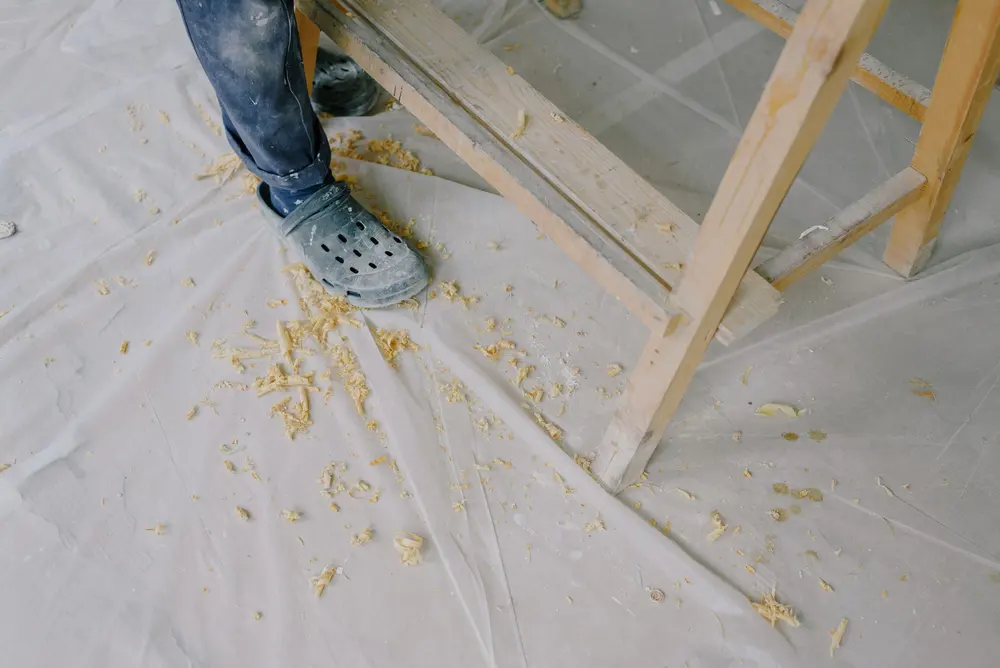
Furniture out, and the existing floor removed and hauled away. Slab or subfloor checked, flattened, and moisture-mitigated if the test called for it. Layout planned: which wall to start on, how the boards run relative to the light and the longest sightline, where the transitions fall. Boards racked out of multiple boxes at once so color variation is mixed rather than blotched.
Then the floor goes down, either nailed or set into adhesive, with an expansion gap at every wall. Transitions, reducers and stair nosing are cut and fitted, and baseboard or shoe molding goes back to cover the gap. A prefinished floor can be walked on the same day. A site-finished floor is sanded and finished after installation, which adds several days and puts the house off-limits while coats cure.
A typical living-and-dining-room job of 500 to 800 square feet in prefinished engineered hardwood is a two- to three-day install after acclimation. A whole main level in site-finished solid over a wood subfloor is closer to a week and a half from first delivery to last coat.
Prefinished or site-finished
Prefinished boards come with a factory finish, usually aluminum-oxide, that is harder than anything applied on site. The install is faster and cleaner and the floor is usable immediately. The trade-off is a small bevel at every board edge and a limited palette.
Site-finished floors are sanded flat after installation and stained and sealed in place, which gives a seamless surface, any color you want, and the ability to match an existing floor exactly. It costs more, takes longer, and involves dust and finish odor. In Orange County the majority of new installs are prefinished engineered, and site-finishing is chosen where matching or a custom color matters. If you already have hardwood and just want it to look new, refinishing is a different and much cheaper job.
What moves the price
Species and grade, with white oak and wide planks at the top. Solid versus engineered, with solid usually costing more in material but only being possible over wood. Slab prep, which can be a small line or a large one. Site finishing versus prefinished. Stairs, which are priced per step and take longer than any equivalent area of floor. Removal of the old floor, especially glued-down tile or old hardwood.
Ask for each of those separately on the quote. Our checklist for comparing flooring quotes is built around exactly these lines, and hardwood is where quotes vary most.
Frequently asked questions
Can solid hardwood go on a slab? Not in a way we recommend. Engineered hardwood is built for concrete and is the right choice for a slab home.
How long does hardwood installation take? Plan on three to five days of acclimation, then two to three days of installation for a typical main living area, longer for site-finished floors, stairs or a whole house.
Does hardwood work in a beach city? Yes, with engineered boards, proper acclimation and a moisture test on the slab. Our waterproof flooring guide for beach homes covers the rooms where hardwood still is not the answer.
Can I stay in the house? For a prefinished install, yes, room by room. For site-finished, you will want to be out while the finish cures.
Get a straight answer for your house
OC Floor Guy has installed solid and engineered hardwood across Orange County since 2012, with licensed crews, moisture testing on every slab and a final walkthrough before we call a job finished. Book a free in-home estimate, and we will check your subfloor, bring samples to your rooms and tell you honestly which hardwood, and which method, your house actually wants.
Thinking about hardwood flooring?
Free in-home estimates across Los Alamitos and all of Orange County. We bring the samples to you.